
Buffer zone and obstacle monitoring
See where space is available, goods are waiting and obstacles interrupt your flow.
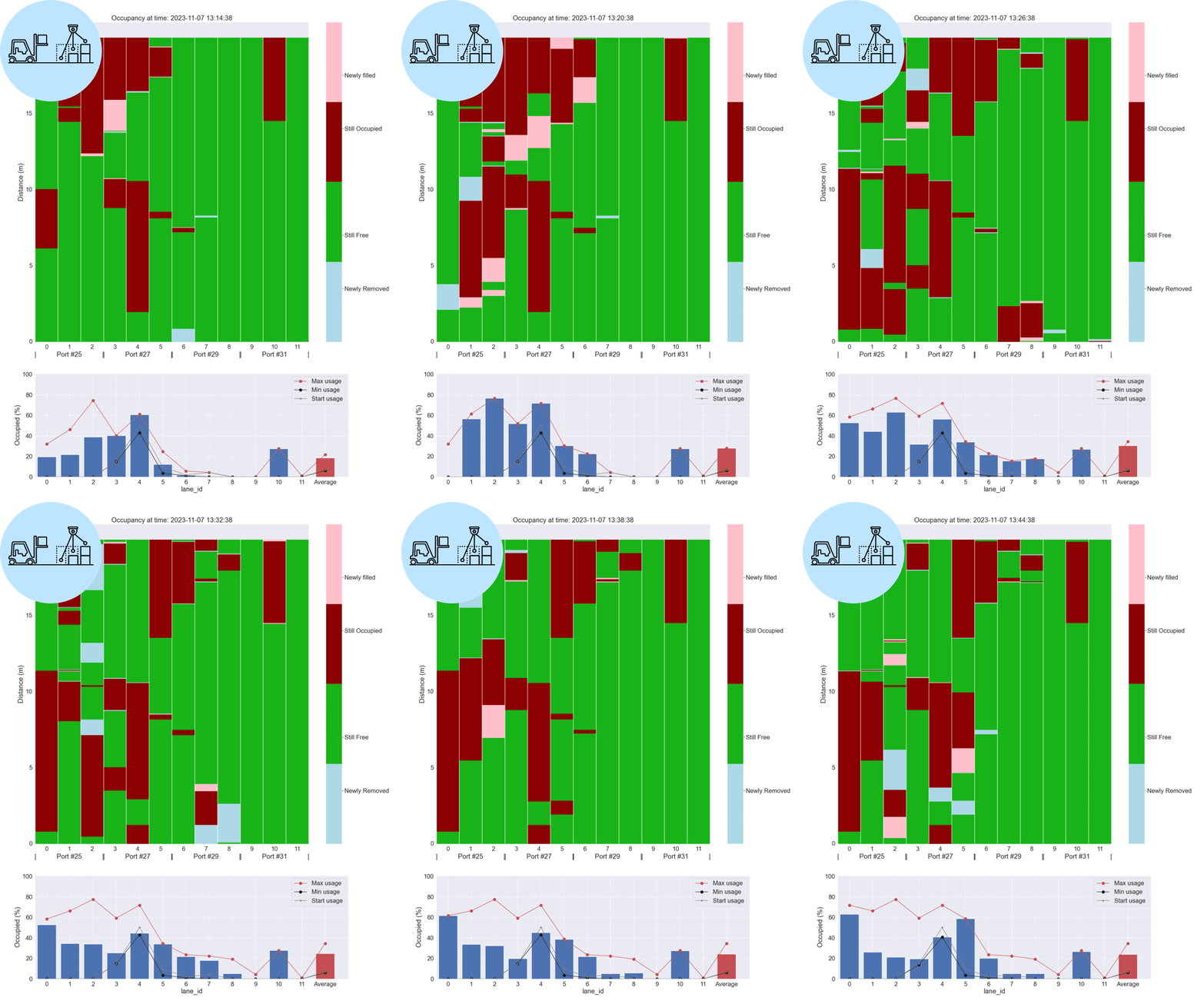
Viscando monitors occupied and available space in real time. Understand how your buffer zones are used and detect blocked aisles, so your team can respond to obstructions and plan material handling with better information.
Which areas are holding up your operation?
Is there room for the next delivery?
Monitor available space in buffer and staging zones, with forecasts of when areas will become full or empty.
What is blocking the way?
Detect obstacles in aisles and emergency exits, helping your team identify areas that need attention.
Where are goods waiting?
Follow the presence and amount of goods awaiting pickup and how long space remains occupied.
Make decisions from actual space use
A buffer zone that looks available on a layout may be full when the next delivery arrives. Viscando’s SmartSpace provides real-time event data on occupancy, helping teams understand current conditions and investigate recurring pressure on operational areas.
Explore how it works
How SmartSpace monitors available space
SmartSpace can cover large areas or multiple zones with a single sensor. It provides information on free and occupied space, time standing and forecasts of when an area will become full or empty.
For goods awaiting pickup, monitoring can include presence, amount, volume and orientation. Material supply monitoring helps teams identify when replenishment is needed. The areas and measurements relevant to your operation are defined when planning the monitoring setup.
Where buffer and obstacle monitoring helps
Useful areas to review include staging zones before dispatch, production handover points, loading areas and aisles that are repeatedly obstructed by pallets or equipment. These are places where temporary storage can interfere with the next movement or delivery.
Start with the operational question: is a zone genuinely short of capacity, are goods waiting too long for pickup, or is material being placed outside its intended area? Occupancy data helps your team investigate these questions alongside its knowledge of the process.
Viscando also identifies blocked aisles and emergency exits as applications for obstacle detection. Your site team remains responsible for deciding how to respond and keeping required routes clear.
How to investigate recurring blockages
An occupied zone is a useful signal, but the surrounding process explains why it matters. Review whether the same area repeatedly fills up, whether goods remain there longer than expected and what happens at the next handover point.
Where movement is also part of the problem, combine space insights with material flow analytics. This helps operations and engineering teams discuss the relationship between waiting areas, traffic and material transfers using a shared factual basis.
How the findings support layout and process changes
Use the findings to guide decisions about staging rules, zone boundaries, pickup routines and layout. Measure conditions before and after a change to evaluate whether space is being used as intended.
In AGV and AMR environments, consider available space alongside routes and interactions with manual forklifts and personnel. Viscando’s broader factories and logistics solutions support assessment of automation and before-and-after analysis.
The technology behind the measurements
Viscando’s OTUS3D technology uses stereoscopic 3D vision and AI to turn observations of the physical environment into data. This gives teams an objective basis for reviewing space use alongside their operational experience.
Frequently asked questions
What is buffer zone monitoring?
Buffer zone monitoring measures whether defined operational areas are occupied or available and how their use changes over time. It helps teams understand staging capacity, goods waiting for pickup and conditions that can interrupt material flow.
Can Viscando detect blocked aisles and emergency exits?
Yes. Viscando lists obstacle detection in blocked aisles and emergency exits among its SmartSpace applications. Define the areas to monitor and the response procedures with your site team. Monitoring supports those procedures; it does not replace them.
Can this support AGV or AMR environments?
Yes. Available space and obstacles matter where automated vehicles share routes and handover areas with manual operations. Discuss your monitoring needs and any integration requirements with Viscando when planning the project.
Does Viscando store video of workers?
OTUS3D processes images in real time and transforms them into data such as numbers and graphs. Images are not sent or stored as video footage.
Find out where your space is under pressure
Tell us which buffer zones fill up, where goods wait or which aisles are repeatedly blocked. We can discuss what to monitor and how the data can support your next operational decision.
